 Image 1 of 1
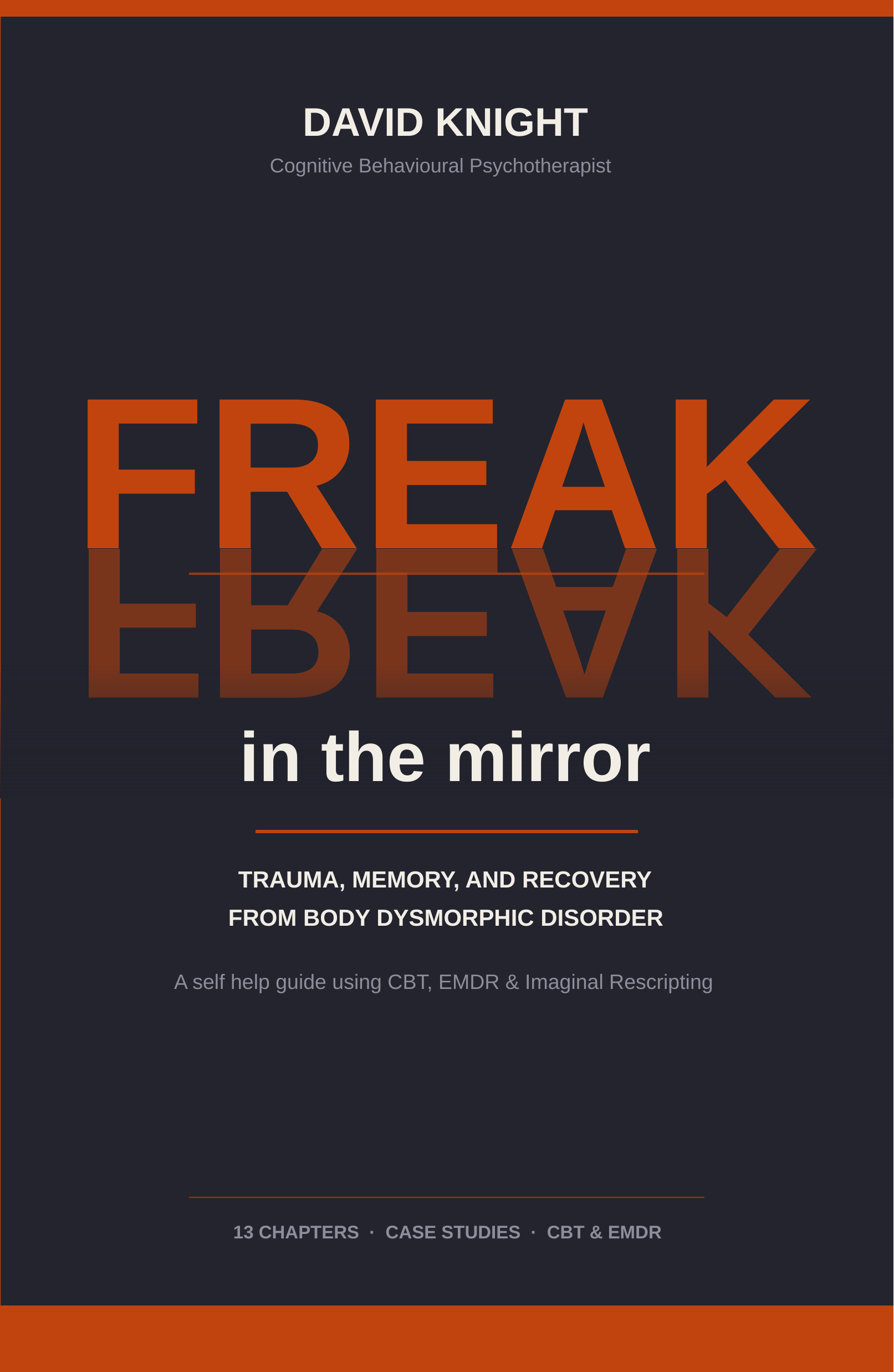
Freak in the Mirror: Trauma, Memory, and Recovery from Body Dysmorphic Disorder
For many people living with Body Dysmorphic Disorder, the mirror doesn't just reflect — it accuses.
Over thirty years of clinical practice, I've sat with people who saw a flaw no one else could see. People who checked, covered, compared, and avoided — not out of vanity, but out of genuine, exhausting fear. People who had been told, more than once, that this was "just" insecurity, something to snap out of.
It isn't. And it doesn't have to stay this way.
Freak in the Mirror is the book I wished I'd had to hand people early in their own understanding of BDD. Rather than a conventional treatment manual, it's built almost entirely from case studies — composite stories drawn from patterns I've seen repeatedly across my career — because I've come to believe most people recognise themselves in a story long before they recognise themselves in a diagnostic checklist.
Chapter by chapter, the book traces:
— why BDD is a disorder of feeling, not appearance, and why reassurance never actually helps
— how early experience, low self-esteem, and sometimes trauma itself lay the groundwork for a lifetime of appearance anxiety
— why some memories never get properly "filed away" — and how that keeps old fear alive in the present, sometimes decades later
— what evidence-based treatment actually looks like in the room: CBT, exposure work, mirror retraining, EMDR, and imagery rescripting
— how partners, parents, and friends can genuinely help, without accidentally making things worse
— what real, sustainable recovery looks like, and what it doesn't
It's written for people living with BDD, for the people who love them, and for the clinicians who treat them — in plain, compassionate language throughout, with a summary and reflective exercises at the end of every chapter.
If you've ever felt like the mirror was telling you the truth about how unacceptable you are, I want you to know: it wasn't. This book explains why, and shows the way through.
Available now in paperback on Amazon.
Freak in the Mirror: Trauma, Memory, and Recovery from Body Dysmorphic Disorder
For many people living with Body Dysmorphic Disorder, the mirror doesn't just reflect — it accuses.
Over thirty years of clinical practice, I've sat with people who saw a flaw no one else could see. People who checked, covered, compared, and avoided — not out of vanity, but out of genuine, exhausting fear. People who had been told, more than once, that this was "just" insecurity, something to snap out of.
It isn't. And it doesn't have to stay this way.
Freak in the Mirror is the book I wished I'd had to hand people early in their own understanding of BDD. Rather than a conventional treatment manual, it's built almost entirely from case studies — composite stories drawn from patterns I've seen repeatedly across my career — because I've come to believe most people recognise themselves in a story long before they recognise themselves in a diagnostic checklist.
Chapter by chapter, the book traces:
— why BDD is a disorder of feeling, not appearance, and why reassurance never actually helps
— how early experience, low self-esteem, and sometimes trauma itself lay the groundwork for a lifetime of appearance anxiety
— why some memories never get properly "filed away" — and how that keeps old fear alive in the present, sometimes decades later
— what evidence-based treatment actually looks like in the room: CBT, exposure work, mirror retraining, EMDR, and imagery rescripting
— how partners, parents, and friends can genuinely help, without accidentally making things worse
— what real, sustainable recovery looks like, and what it doesn't
It's written for people living with BDD, for the people who love them, and for the clinicians who treat them — in plain, compassionate language throughout, with a summary and reflective exercises at the end of every chapter.
If you've ever felt like the mirror was telling you the truth about how unacceptable you are, I want you to know: it wasn't. This book explains why, and shows the way through.
Available now in paperback on Amazon.